
The Hidden Protocol Behind Agentic AI Online Shopping UCP
What Is Google’s Universal Commerce Protocol (UCP) and Why It Matters
Most important changes to the internet do not arrive as products people can see or download. They appear quietly, as technical standards that reshape how systems communicate behind the scenes.
A few days ago, Google introduced one of those changes. It is called the Universal Commerce Protocol. While the name sounds abstract, the idea is simple: helping artificial intelligence understand how online stores work, what they sell, and how purchases happen.
This is not just a technical concern. It affects how products are discovered, how decisions are made, and how shopping may feel as AI increasingly becomes an intermediary between people and the internet. This article introduces Universal Commerce Protocol, explains why Google launched it now, and explores why it could matter more than it first appears.
How Online Shopping Still Works
Despite all the progress in ecommerce, buying something online still follows a familiar pattern. You search for a product, open several websites, compare prices, check delivery times, and try to decide which option feels safest or most convenient.
It is a process built around browsing and comparison, and it works because it was designed for humans.
But this same structure becomes a problem when artificial intelligence enters the picture.
When someone asks an AI assistant to help them buy something, the AI quickly runs into friction. Not because it lacks intelligence, but because online stores were never built to communicate with software agents.
They were built to communicate with people.
Why AI Has Trouble With Commerce
AI systems do not think in pages or layouts. They think in intentions and actions. An AI assistant wants to answer questions like:
Is this product available right now
What is the current price
How long will delivery take
Can the purchase be completed securely
Most ecommerce systems do not expose this information in a clean, standardized way. Prices are often buried in pages. Inventory is revealed late in the process. Checkout flows vary widely. As a result, every attempt to connect AI systems to online stores requires custom integrations that are fragile and hard to maintain.
This lack of a shared language between AI and commerce is one of the biggest obstacles to more intelligent shopping experiences.
What Universal Commerce Protocol Is
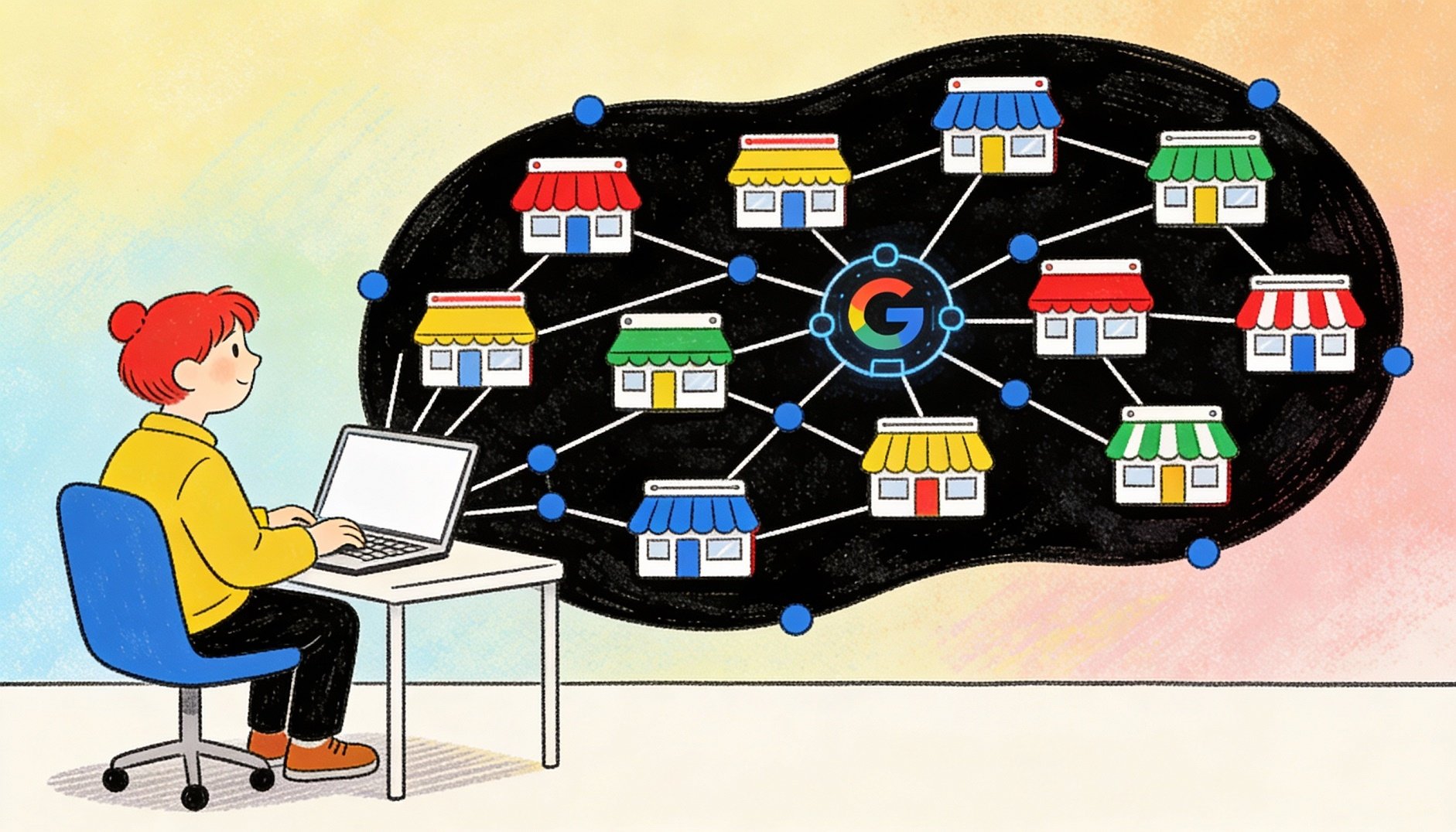
Universal Commerce Protocol is Google’s attempt to solve this problem at the foundation level. Instead of asking AI systems to adapt to millions of different ecommerce implementations, UCP provides a common way for stores to describe how buying works.
Through UCP, a store can clearly communicate:
What products it offers
What the current price is
Whether an item is in stock
How a purchase can be completed
This information is structured so that machines can understand it reliably and act on it without guessing or scraping websites.
Google has positioned UCP as an open protocol, meaning it is not limited to a single platform or company. Anyone can adopt it and build on top of it. Google’s own overview is available here:
https://developers.googleblog.com/under-the-hood-universal-commerce-protocol-ucp/
Why This Is Happening Now
The timing of UCP is closely tied to how AI assistants are evolving. These systems are moving beyond answering questions and summarizing information. They are increasingly designed to help users make decisions and complete tasks.
This shift is already visible.
Search is becoming more conversational
Recommendations are becoming more contextual
User intent is becoming more important than keywords
Once an AI understands what someone wants and under what constraints, helping with a purchase becomes a natural extension of that interaction.
Commerce, however, is more complex than most other AI-assisted tasks. Prices change frequently. Inventory fluctuates. Payments require trust and security. Merchants need control over pricing, fulfillment, and customer relationships. Without a shared foundation, AI-driven commerce cannot scale safely.
Universal Commerce Protocol is an attempt to create that foundation before AI becomes the primary interface for the internet.
A Subtle Shift in Power
One of the most important aspects of UCP is what it does not try to do. It does not replace online stores, and it does not turn AI systems into marketplaces. Instead, it creates a bridge.
Merchants remain fully in control.
They set prices
They manage fulfillment
They own the customer relationship
UCP simply allows them to express these capabilities in a way that AI systems can understand in real time.
As AI becomes a major channel for discovery and decision-making, being understandable to AI may become just as important as being visible in traditional search results once was.
How Shopping May Gradually Change
If UCP becomes widely adopted, the experience of shopping online will change slowly rather than suddenly. People will spend less time opening tabs and more time describing what they want. AI systems will narrow choices, surface relevant options, and reduce friction.
This does not mean people give up control. It means fewer repetitive steps and clearer decisions.
Infrastructure changes rarely feel dramatic when they happen. They spread quietly, through platforms and systems that most users never see.
Why You Are Hearing About This Early
Right now, Universal Commerce Protocol exists mostly in the background.
Most consumers do not know the name
Many merchants are only beginning to encounter it
Only a small number of platforms are actively preparing for it
That is exactly how foundational technologies begin. By the time they become obvious, they are already everywhere.
Years from now, when buying through AI feels normal and unremarkable, Universal Commerce Protocol may be one of the reasons that transition felt smooth rather than chaotic.
 Add Comment
Make Your Business Online By The Best No—Code & No—Plugin Solution In The Market.
30 Day Money-Back Guarantee
Create Your E-commerce Store Start now — it's freeSay goodbye to your low online sales rate!